How Social Media Algorithms Work: A Simple Guide for Regular People
Ever posted something you thought was hilarious, and it got like three likes? Then your friend posts a blurry photo of their lunch, and it blows up? Yeah, that’s the social media algorithm doing its thing. Annoying, right? But once you understand how it actually works, it makes a lot more sense.
Let’s talk about this in plain, everyday language. No confusing tech talk. Just simple explanations that actually make sense.
What Is a Social Media Algorithm, Really?
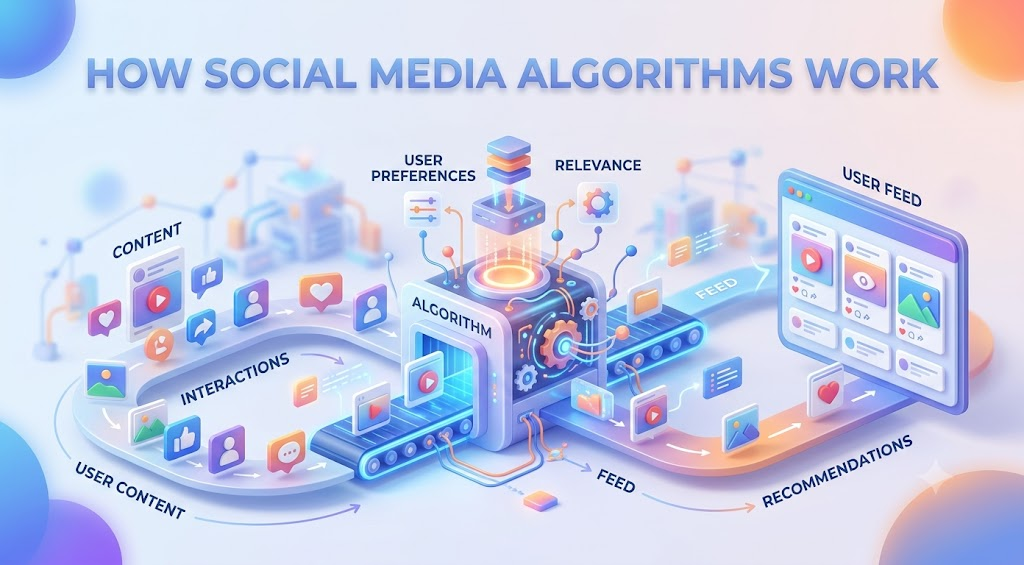
A social media algorithm is basically a set of rules a platform uses to decide what content shows up on your feed, and in what order. It’s not random. Every app, whether it’s Instagram, TikTok, Facebook, or YouTube, uses some kind of algorithm to figure out what you’ll probably want to see next.
Think of it like a very picky waiter at a restaurant. This waiter watches what you usually order, what you like, what you skip, and then brings you more of what you seem to enjoy. That’s basically what the social media algorithm does with your feed.
Why Do Platforms Even Use Algorithms?
Good question. Why not just show posts in the order they were made, like the old days?
Well, here’s the thing. There’s just too much content out there now. If Instagram showed you every single post from everyone you follow in plain order, you’d be scrolling for hours just to catch up. Nobody has time for that.
So instead, the algorithm sorts through all that noise and tries to show you stuff you’re more likely to actually care about. It’s less about showing everything, and more about showing what matters to you specifically.
Also, let’s be honest, these platforms make money by keeping you on the app longer. The algorithm’s job is partly to keep your thumb scrolling, because more time spent equals more ads seen equals more money made.
How Does the Algorithm Decide What You See?
This is where it gets interesting. While every platform has its own secret formula, most social media algorithms look at a few common things.
Engagement. This includes likes, comments, shares, and saves. If a post gets lots of engagement quickly, the algorithm often assumes it’s good content and shows it to more people.
Watch time. Especially on platforms like TikTok and YouTube, how long you watch a video matters a lot. If you watch something all the way through, or even rewatch it, the algorithm takes that as a strong signal that you liked it.
Relationships. The algorithm also looks at who you interact with most. If you always comment on your best friend’s posts, their content is more likely to show up higher in your feed.
Recency. Newer posts often get a small boost, especially right after they’re posted, to see how people initially react.
Content type preference. If you always stop to watch videos but scroll past photos, the algorithm learns that and starts showing you more videos.
Basically, the algorithm is like a nosy friend who’s always watching what you do, then adjusting what they show you based on your habits.
Different Platforms, Different Algorithms
Now here’s something important. Not every social media algorithm works exactly the same way. Each platform has its own priorities.
Instagram algorithm focuses heavily on relationships and interests. It tries to guess how likely you are to interact with a post based on your past behavior.
TikTok algorithm is famous for being extremely good at predicting what you’ll enjoy, sometimes almost creepily good. It relies a lot on watch time and how quickly people engage after seeing a video.
Facebook algorithm tends to prioritize content from close friends and family, along with groups you’re active in, over public pages, unless that content sparks a lot of discussion.
YouTube algorithm focuses a lot on watch time and session duration, meaning it wants to know not just if you watched one video, but if you kept watching more videos after that.
Each platform tweaks its formula constantly, which is why what worked last year might not work as well today.
Why Does This Matter for Regular Users?
You might be thinking, “Okay, but why should I care how this works? I’m not trying to go viral.”
Fair point. But understanding the basics still helps in everyday ways.
For one, it explains why your feed sometimes feels like it “knows” you a little too well. It’s not magic; it’s just pattern recognition based on your habits.
It also helps explain why certain content keeps popping up, even stuff you didn’t expect to see. If you paused on a video for even a few seconds, the algorithm might have noted that as interest.
And if you’re someone who creates content, even casually, understanding how the algorithm works can help you get a little more visibility without needing to become some kind of marketing expert.
Sites like TechInGot often break down these kinds of platform changes and algorithm updates in simple terms, which can be helpful if you want to stay updated without diving into overly technical explanations.
Common Myths About Social Media Algorithms
There’s a lot of confusion (and honestly, some silly myths) floating around about how these algorithms work. Let’s clear a few up.
Myth: Posting at a certain “magic time” guarantees more views. While timing can help a little, it’s far less important than the actual quality and engagement of your content.
Myth: The algorithm punishes you for taking a break. Many people believe stepping away from posting for a while tanks your reach permanently. In reality, most algorithms adjust fairly quickly once you start posting consistently again.
Myth: Hashtags are the secret key to going viral. Hashtags can help with discovery, but they’re just one small piece of a much bigger puzzle.
Myth: The algorithm is purely random. It’s definitely not random. It’s based on data and patterns, even if it sometimes feels unpredictable.
How Algorithms Affect Mental Health
This is something worth talking about honestly. Because these algorithms are designed to keep you engaged, they can sometimes show content that’s emotionally charged, dramatic, or even upsetting, simply because that type of content tends to get more reactions.
This is why it’s easy to fall into a scrolling trap, where you keep watching things that make you anxious, jealous, or upset, without even realizing why you can’t stop.
Being aware of this can help you make small changes, like muting certain accounts, taking regular breaks, or being mindful of how much time you’re spending scrolling.
Simple Tips to “Work With” the Algorithm (Without Losing Your Mind)
If you’re someone who posts online, even just for fun, here are a few simple, honest tips:
- Focus on genuine engagement. Real comments and shares matter more than just chasing likes.
- Post consistently, but don’t stress over perfection. Regular posting helps the algorithm understand your content style.
- Pay attention to what performs well. If certain types of posts get more engagement, that’s useful feedback, not a strict rule to follow blindly.
- Don’t obsess over numbers. Algorithms change all the time. What works today might shift next month.
- Prioritize your own wellbeing. Don’t let chasing algorithm approval affect your mental health or self-worth.
The Future of Social Media Algorithms
As artificial intelligence keeps improving, social media algorithms are expected to become even more personalized. This means feeds may become even more tailored to individual preferences, sometimes for better, sometimes raising more questions about privacy and data use.
There’s also growing conversation around transparency, meaning users and lawmakers are asking platforms to explain more clearly how these algorithms actually work and what data they use to make decisions.
Final Thoughts
At the end of the day, the social media algorithm isn’t some scary, mysterious force. It’s simply a system built to guess what you’ll enjoy based on your past behavior. Once you understand the basics- engagement, watch time, relationships, and recency- it becomes a lot less confusing, and honestly, a little less frustrating too.
Whether you’re just scrolling for fun or trying to grow a small online presence, knowing how these systems work can help you use social media a bit more mindfully.
If you enjoyed this simple breakdown and love writing about topics like social media, algorithms, or digital trends, many technology blogs are always open to fresh voices. Check out the write for us pages on relevant tech sites if you’d like to share your own take and help others understand this stuff in plain, simple language too.